
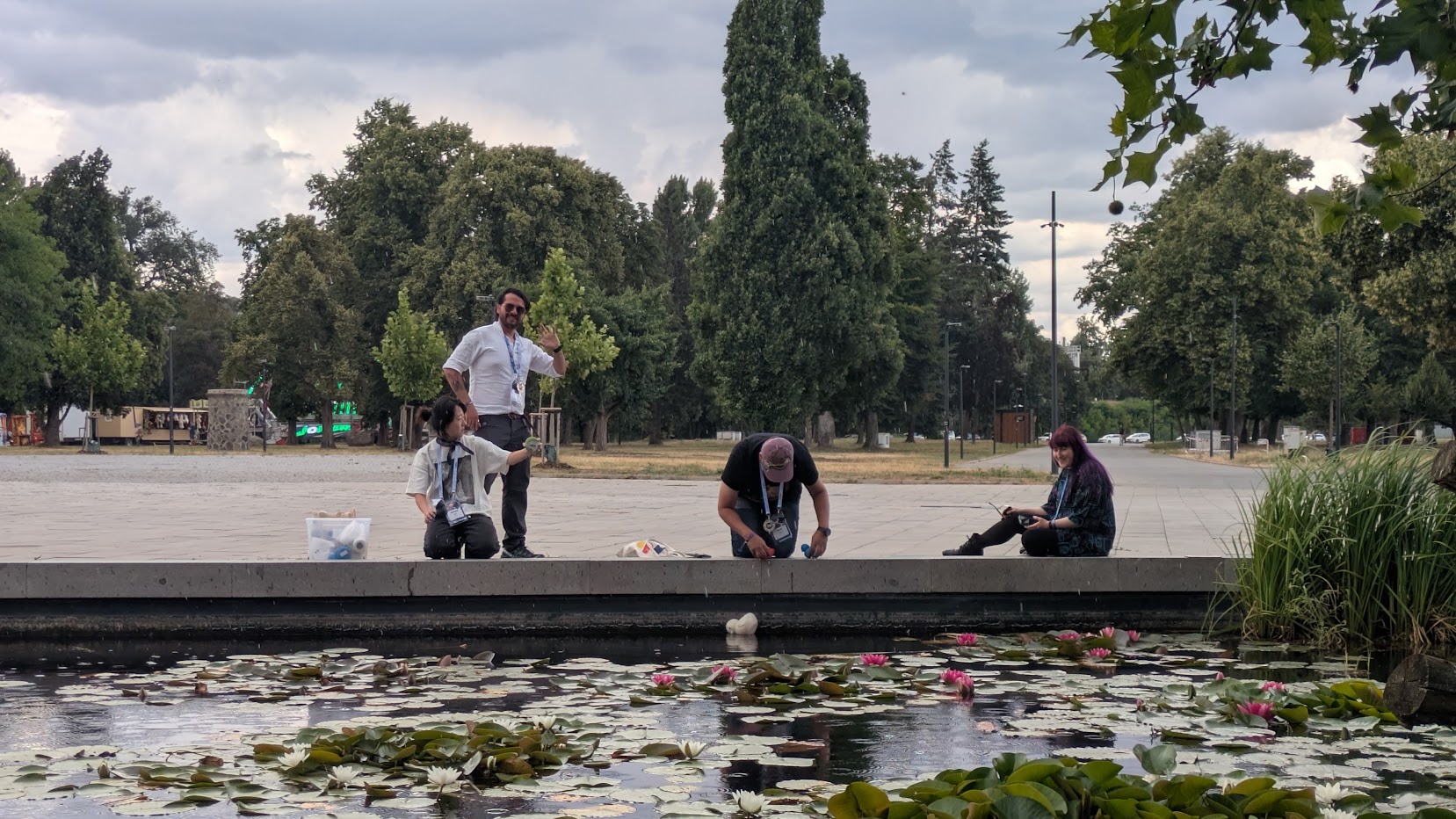
Live data from Singapore: https://ediblemakerspace.com/citizenquack
Focus: Participatory design, environmental sensing, community engagement The goal: Give environmental data a face, so people stop scrolling past it.
A PM2.5 reading of 38 doesn’t mean much to most people at a glance. A duck that’s gone a bit orange and started waddling funny does.
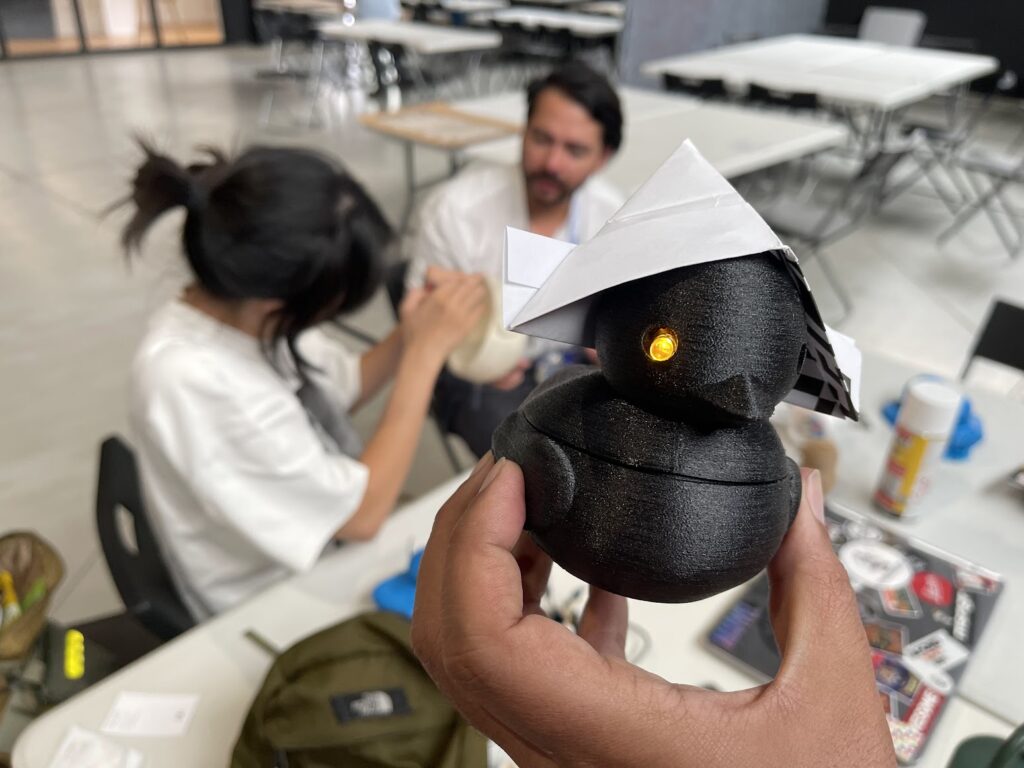
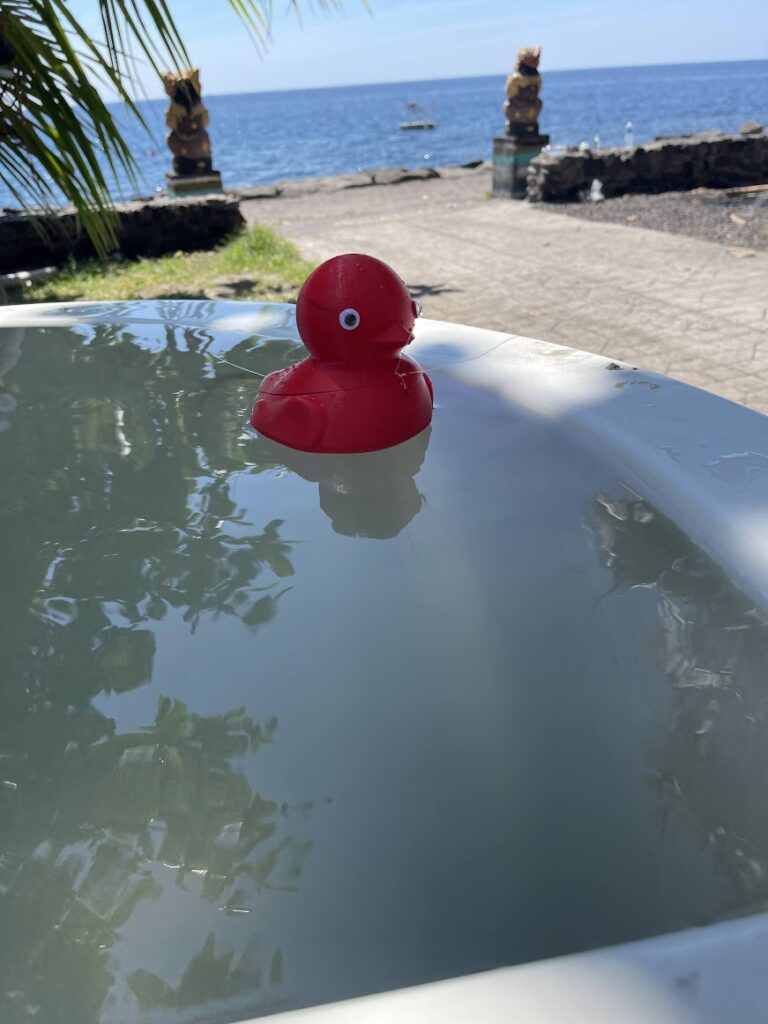
CitizenQuack is our ongoing participatory design effort to get environmental sensor nodes out of their boring boxes. Instead of a beige enclosure quietly logging numbers nobody checks, the sensor lives inside a 3D-printed duck (or whatever creature the community decides to print that month) whose posture, colour, and quack change with what it’s actually sensing — air quality, humidity, noise, whatever we’ve wired it up to notice. The instrument becomes a character you check on, not a dashboard you ignore.
The “participatory” part is the point: we run the design in the open, with the community deciding the creature, the behaviours, and the enclosure files together, then printing and customising their own. Every duck is a fork — same sensor guts, different shell, different personality. It’s citizen science and product design happening at the same table, which is very much how we like to work.
CitizenQuack is still growing new species. If you want your neighbourhood’s air quality data to come with a face (webbed feet optional), get in touch — we’d love to design the next one with you.
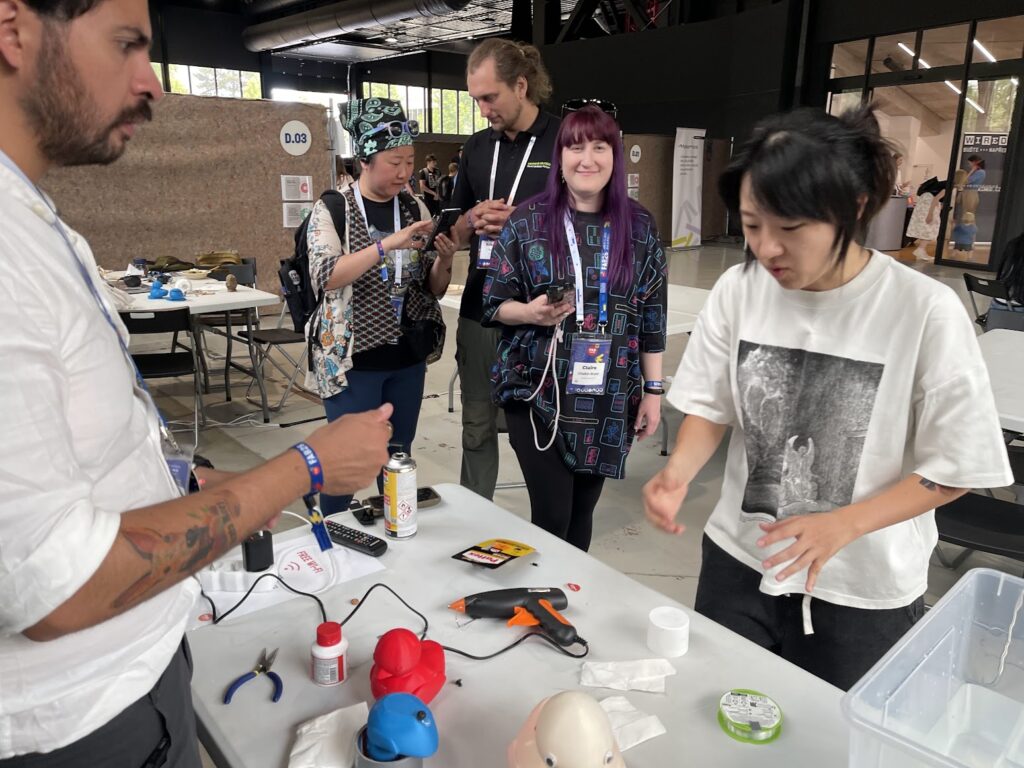
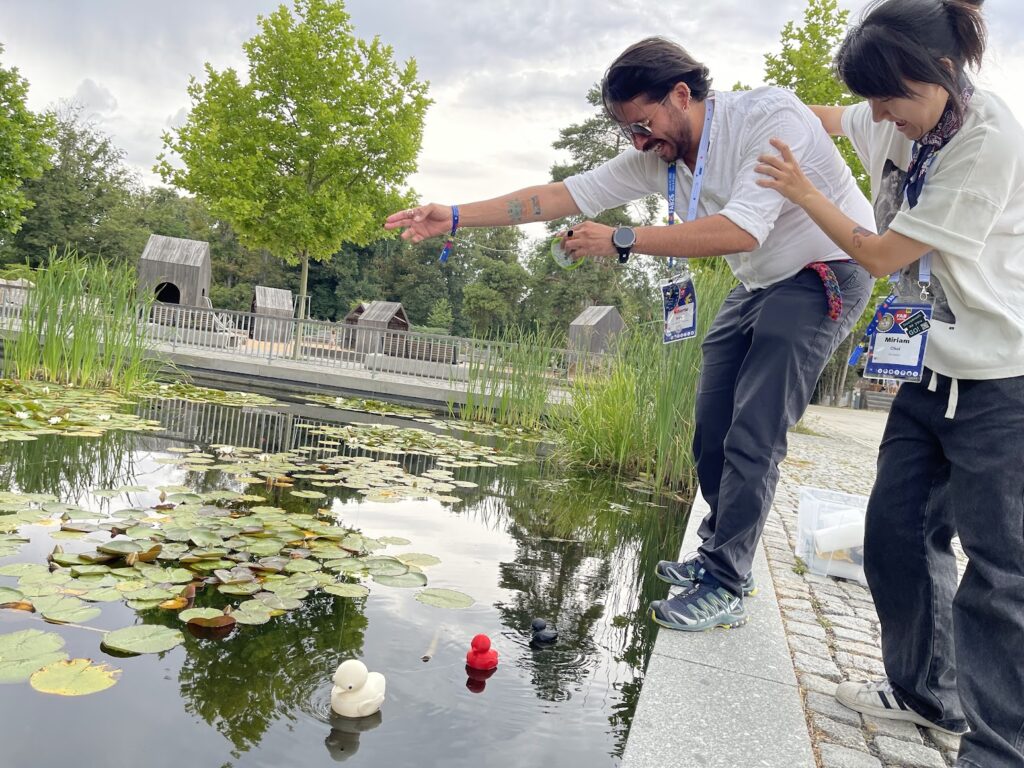
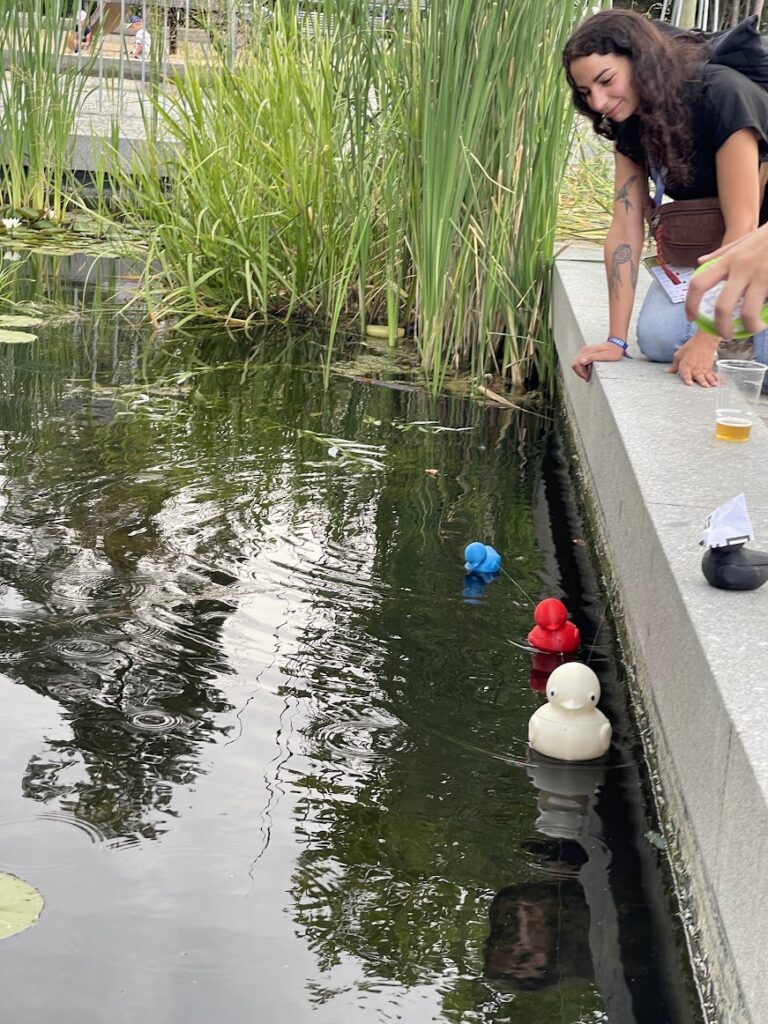
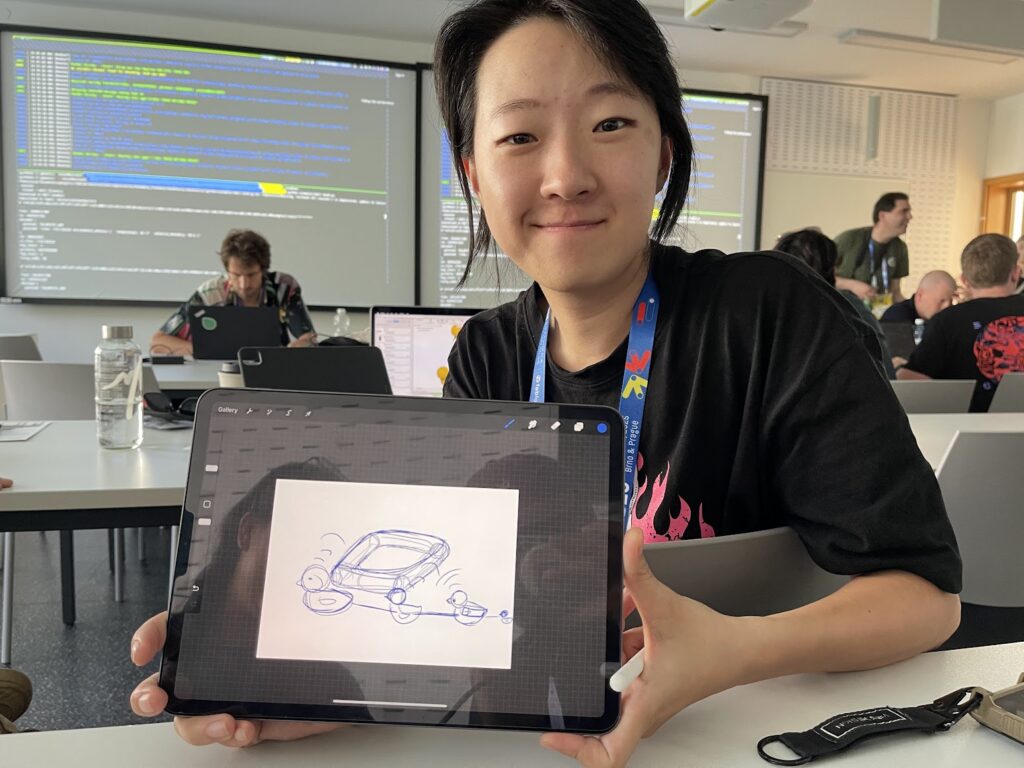
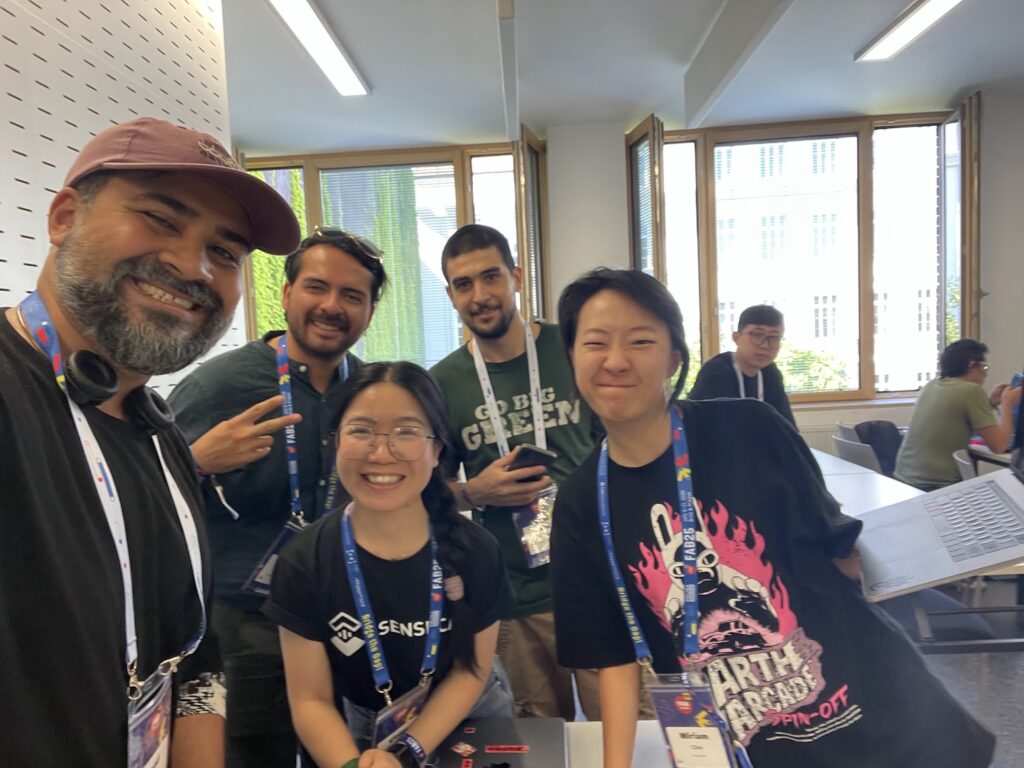
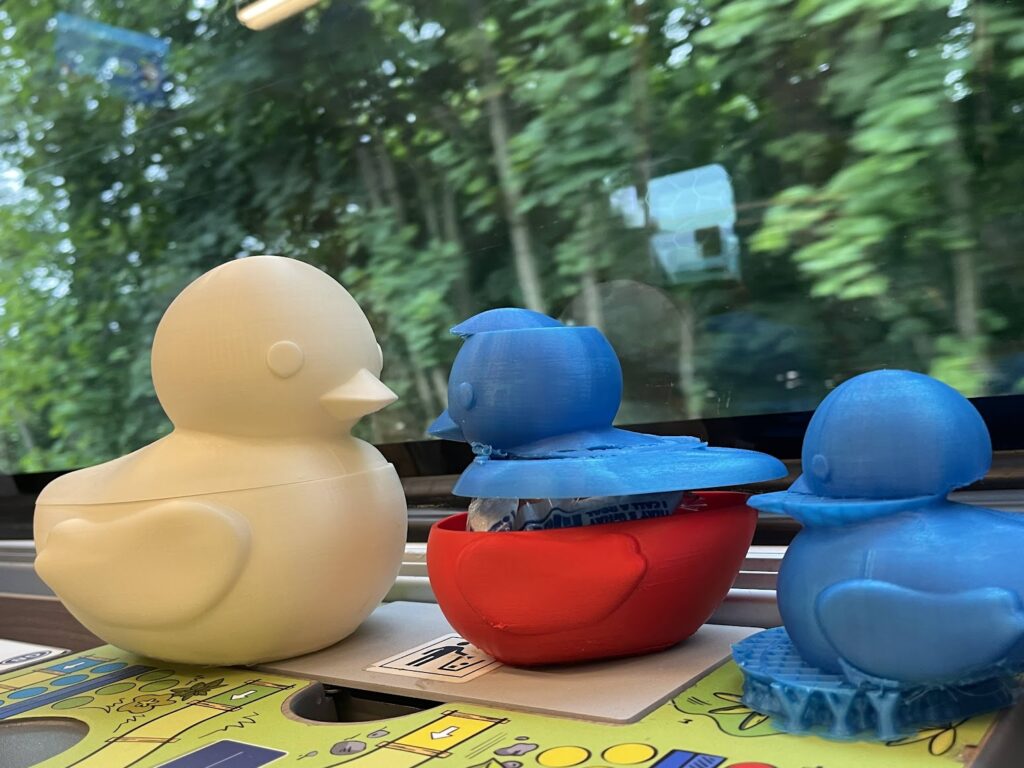
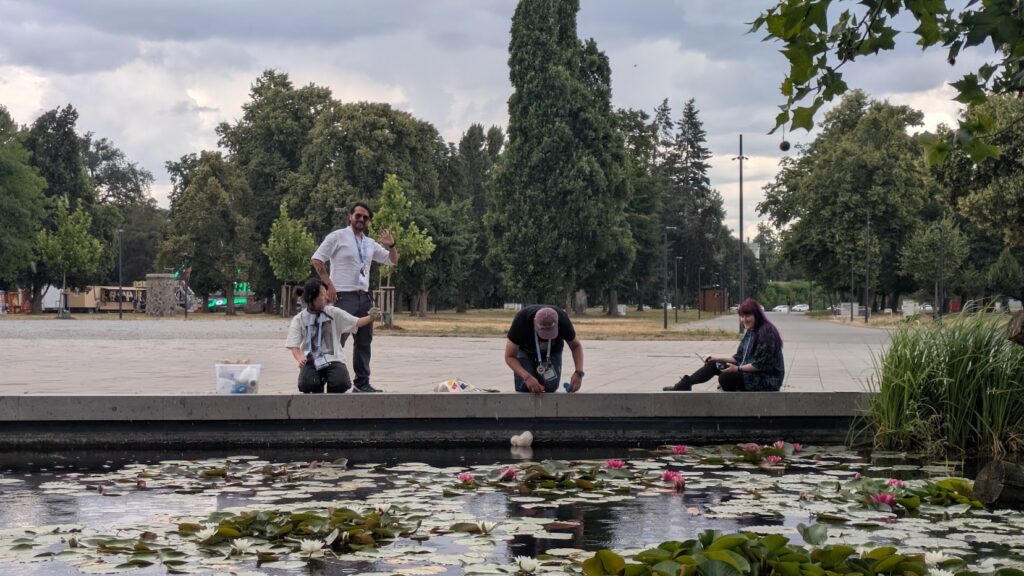
Origins: The CitizenQuack team first met at FAB24 México (Puebla), but the project itself came together a year later at FAB25 Czechia (Brno and Prague), during Fab Lab Barcelona’s “Smart Citizen Meets Meshtastic” hackathon — building Smart Citizen Kit 3.0 with LoRa/Meshtastic support, led by Óscar González and Guillem Camprodon, alongside Seeed Studio, Meshtastic, Hackster.io, the University of Glasgow, and Sensirion. The team: Saad Chinoy, YeEun “Miriam” Choi, Alberto Blanco, Jinger Zeng, Claire Chaikin-Bryan (Australia), Selena Pere (France), and Robert Bogs (Germany), with Violet Su (Seeed Studio) as a supporting contributor. What began as a hackathon exercise in making sensor data less boring turned into an idea Edible Makerspace kept building on afterward.
Now feeding PLANETAI: citizenquack-sg’s readings now contribute to a Singapore node of PLANETAI, a Fab City Foundation research initiative — still alpha — that’s trying to shorten the distance between planetary Earth-observation models and a fab lab’s ability to actually do something with what they show. Its Community tier is built for exactly this: local sensor feeds like Smart Citizen kits, ingested at the fab-lab-shed scale, feeding upward into bioregional and city-level decisions instead of sitting in a dashboard nobody acts on. It’s the same instinct behind the duck — data that reaches a decision, not just a screen.
The Singapore node is still unofficial — not yet part of PLANETAI’s public pilot list — and running on dev hardware. You can watch it live at saadcaffeine.tplinkdns.com:8080 (plain HTTP for now — no certificate on the dev box yet, so expect a browser warning).